
Spanish roots
Descended from Iberian cattle brought to the Americas in the early 1500s, and related to other criollo types such as Florida Cracker and Texas Longhorn cattle.
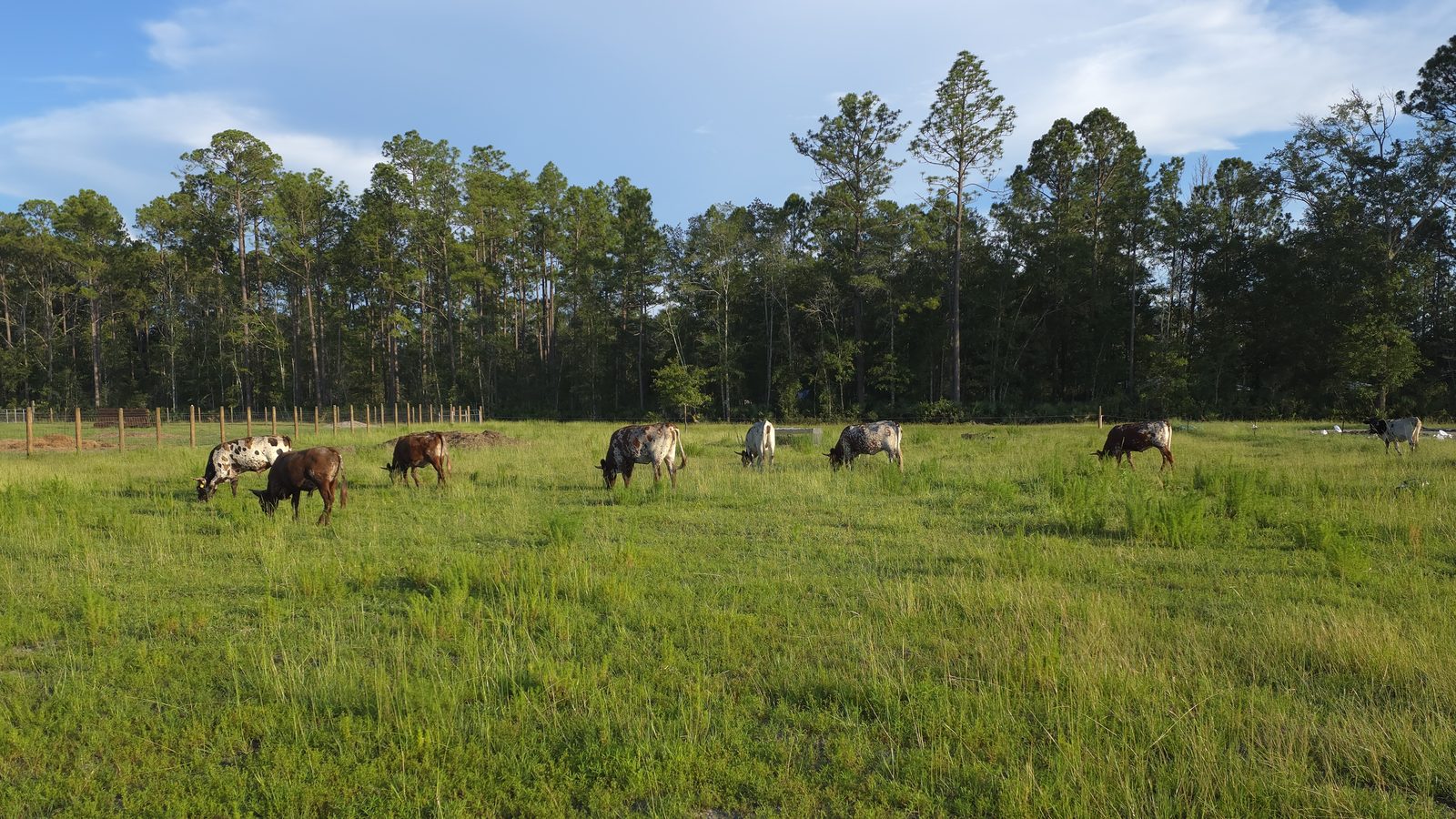
Heritage cattle · Southeast Georgia
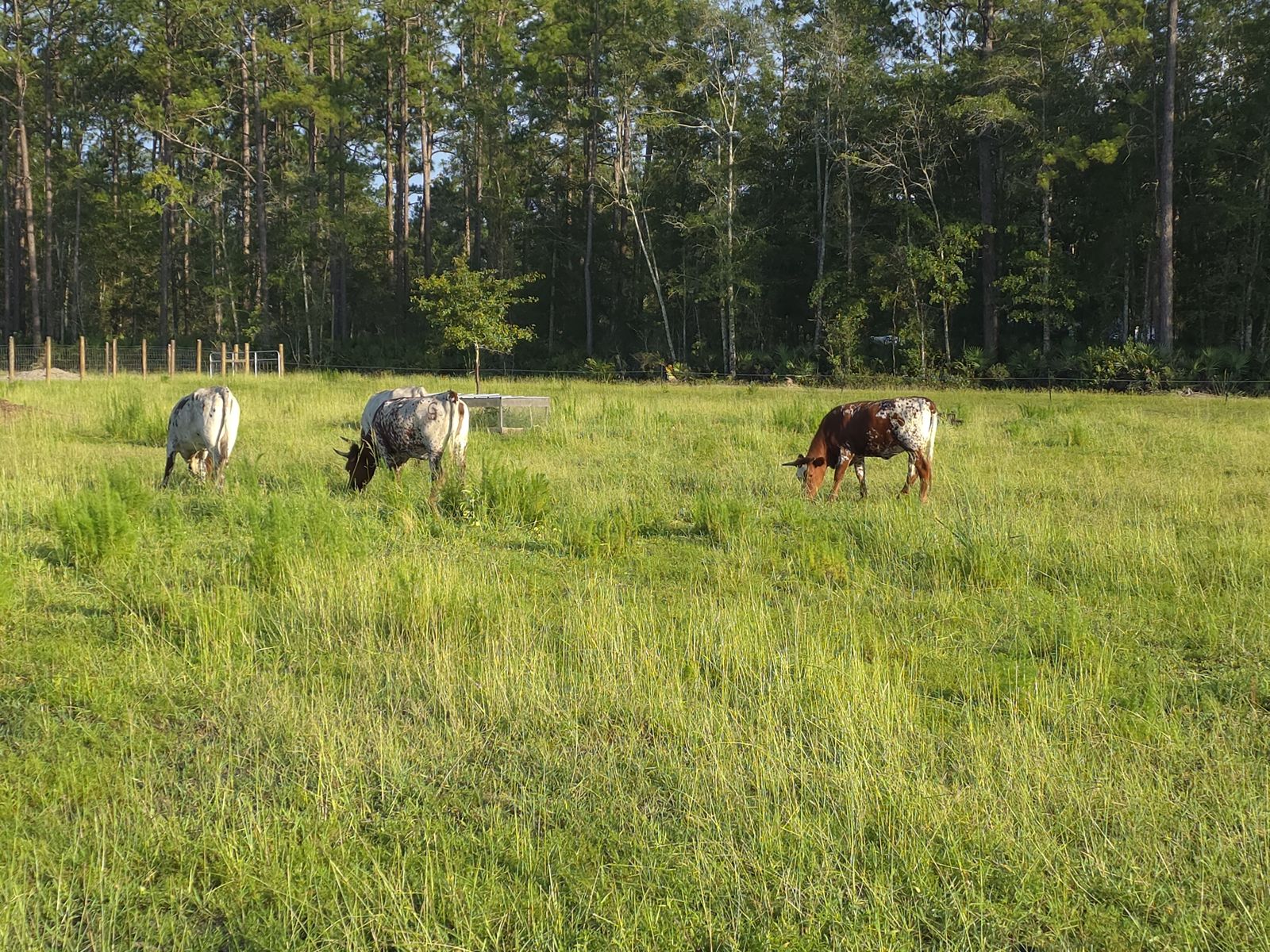
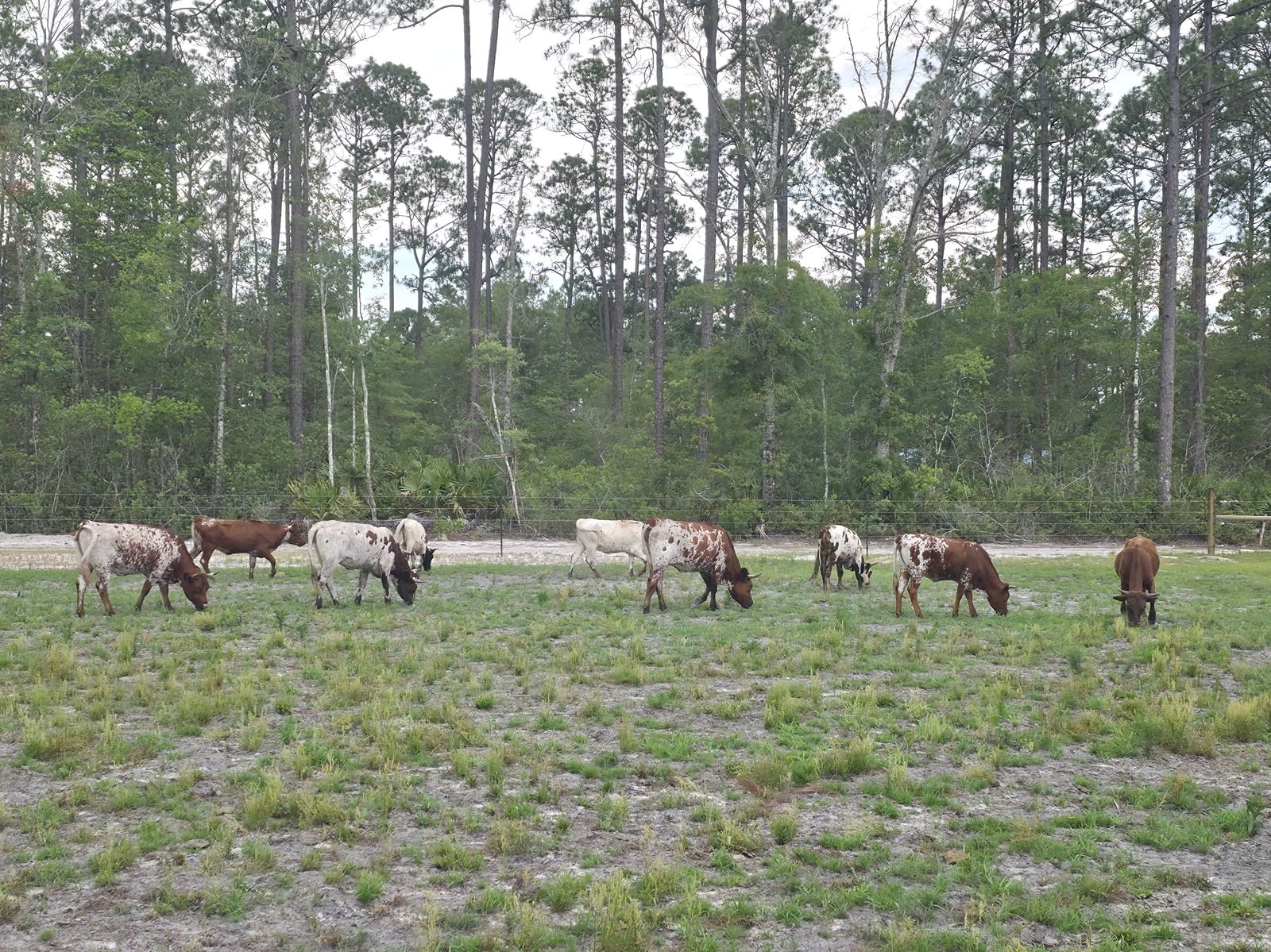
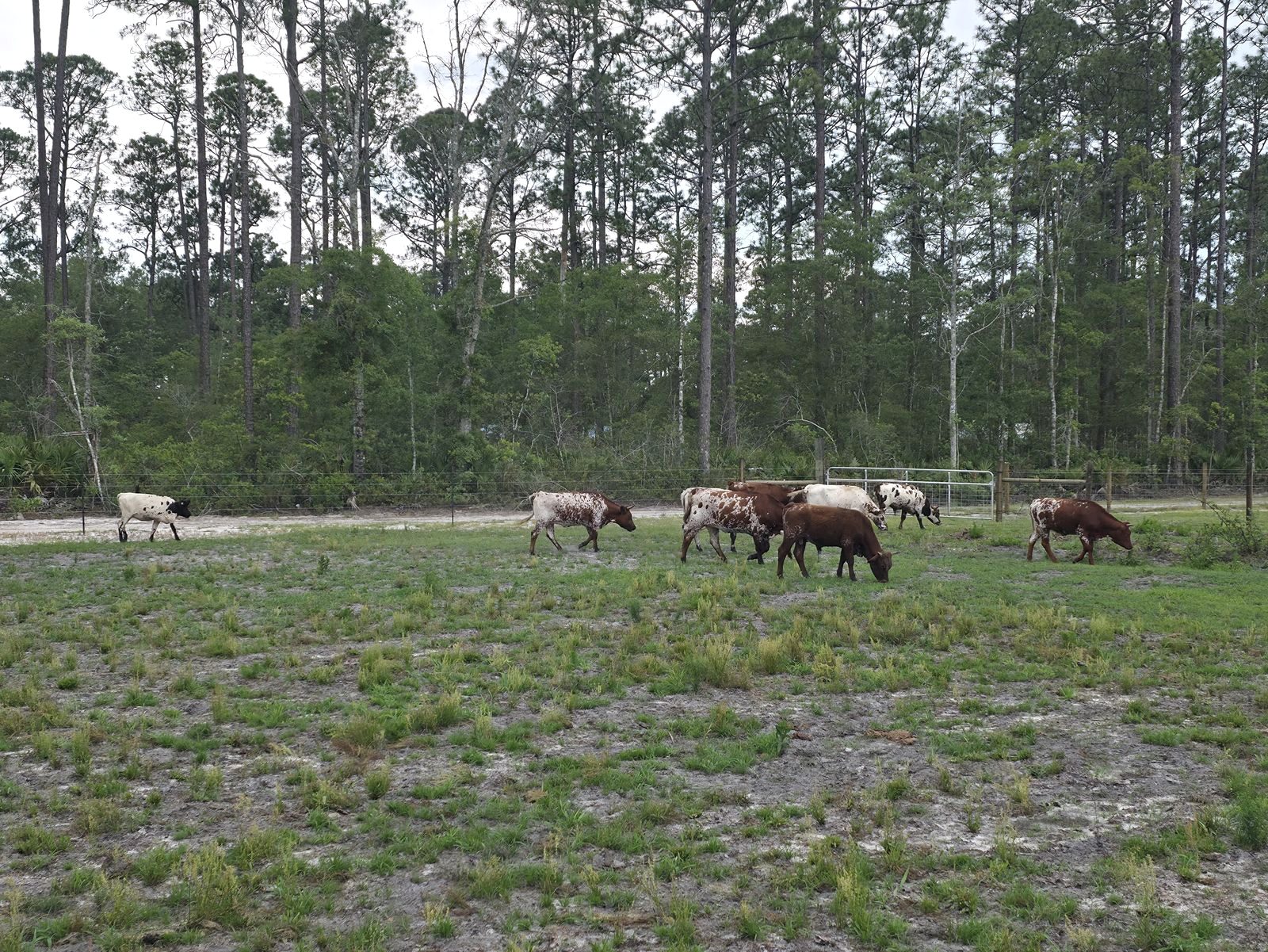
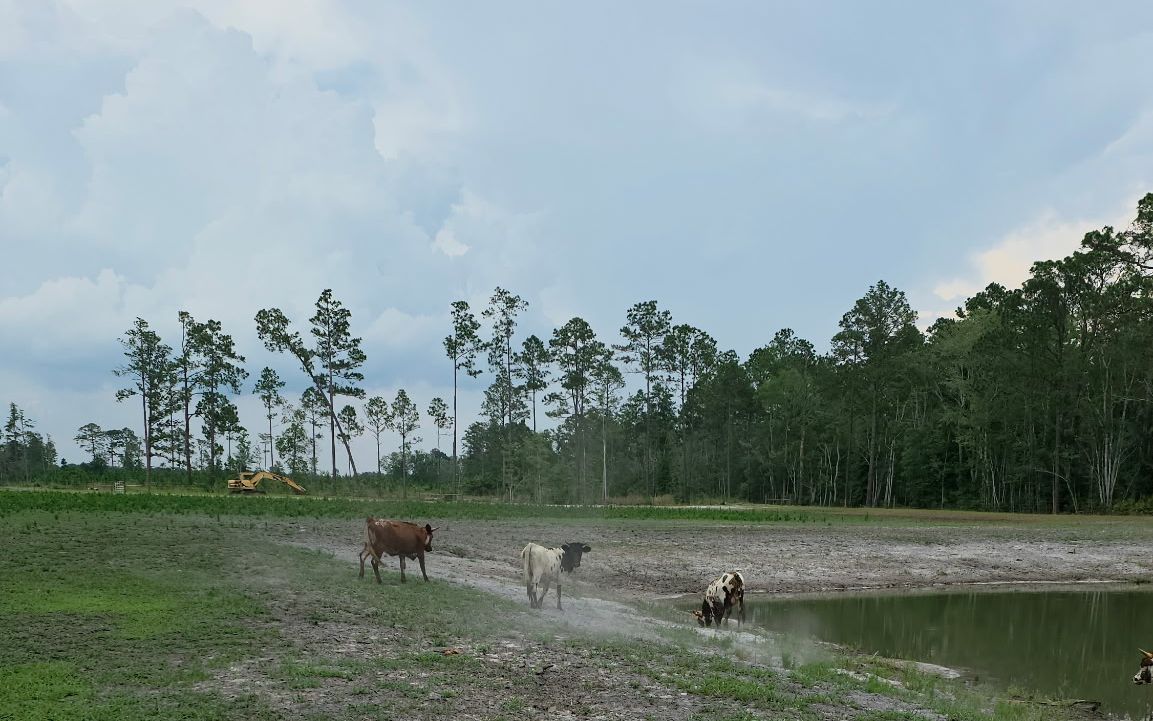
A new Pineywoods herd, growing toward calico-colored calves in the pine woods of southeast Georgia.
Welcome
Outskirts Pineywoods Farm is a new heritage cattle operation in southeast Georgia. We are just getting started—settling a small foundation herd and learning this rare American breed.
Today the herd is eight animals: four Conway-strain heifers, two Holt/composite heifers, one Holt/composite cow, and a Holt/composite herd bull. Our eye is on calico coloration, and our work is to grow this herd carefully so that we can offer offspring to others who want to help keep Pineywoods cattle on the land.
Our bull calf, Outskirts Wildcard, born October 19, 2026, will be available around mid-April 2027. If you are curious about the breed, interested in that calf or in future offspring, or simply want to follow along, you are welcome here.
About the breed
Pineywoods cattle are one of the oldest breeds in the United States. They descend from Spanish cattle brought to the Americas beginning in the early 1500s—criollo cattle, of European origin but born in the New World. Over centuries they were shaped by the heat, humidity, parasites, and pine woods of the Gulf Coast and Deep South, especially Alabama, Mississippi, and Georgia.
The result is a landrace: a local type formed under local conditions, rather than a tightly standardized show breed. Pineywoods cattle are small-framed and rugged, heat-tolerant, long-lived, and notably resistant to parasites and disease. They can stay productive on marginal forage. Families used them for beef, sometimes for milk, and—especially as the timber industry grew—as oxen in the southern woods.
In the late 1800s and early 1900s, “improved” English and European cattle were brought into the Southeast. Where those breeds could tolerate the climate, they replaced the native herds, and widespread crossing nearly erased the pure Pineywoods. The breed survived in the hands of a few families whose isolated herds became distinct strains, often named for the people who kept them: Conway and Carter in Mississippi, Holt in Georgia, Hickman, Barnes in Alabama, and others.
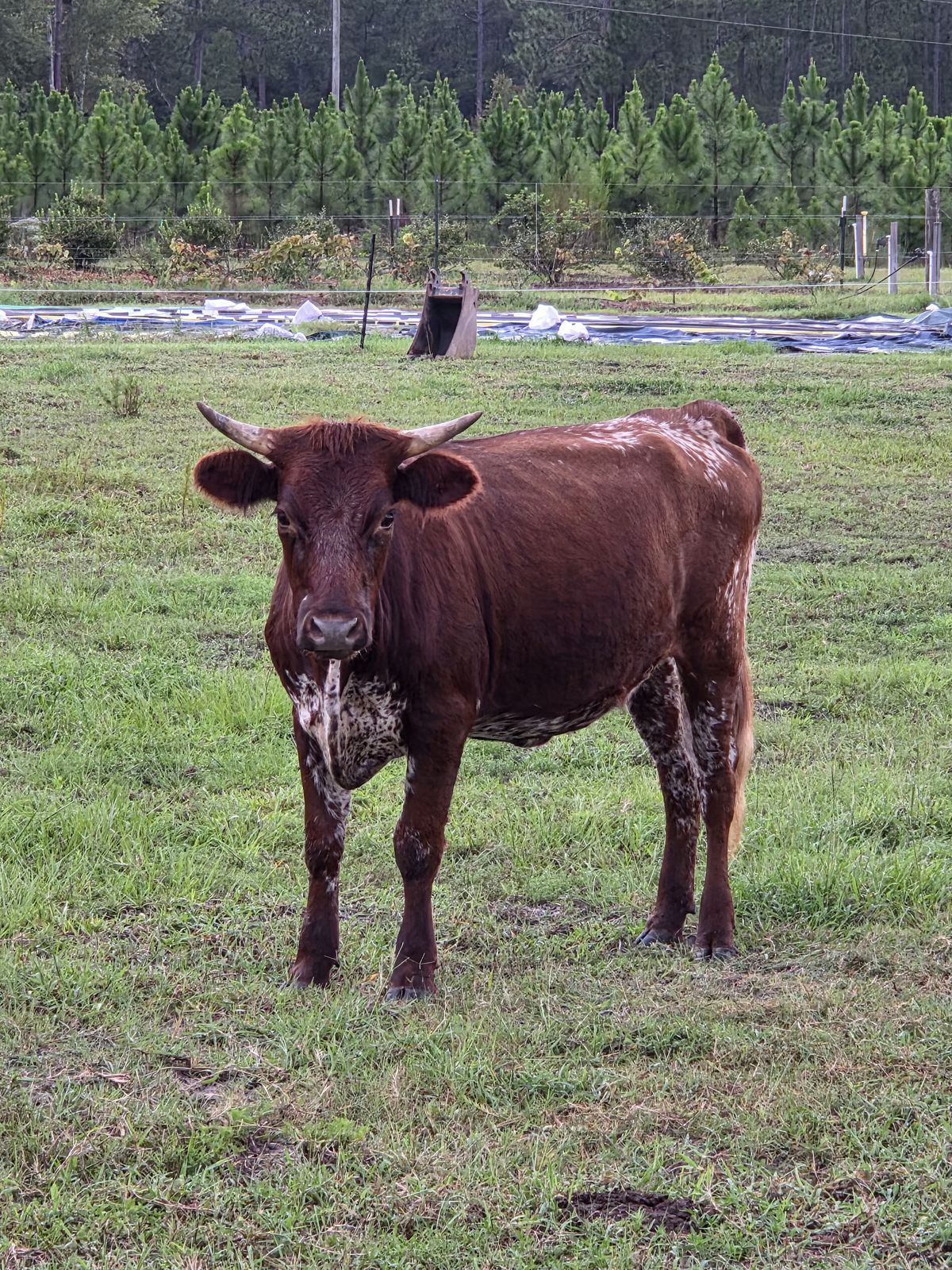
Those family strains remain the heart of the breed. Conway cattle are typically some shade of red and white, often speckled. Holt cattle, a Georgia line later associated with the Okefenokee country, are generally small to medium and blocky, often color-sided, in reds and blacks. Hickman cattle tend to be larger and rangier, with a wide range of colors and patterns. Across the breed, coats run from solid reds, blacks, yellows, and grays to brindle, roan, speckled, and color-sided patterns—a diversity inherited from their Spanish ancestors.
The Livestock Conservancy lists Pineywoods as Threatened. The Pineywoods Cattle Association works to keep pedigrees, monitor scarce bloodlines, and connect breeders who are helping the breed survive.
Descended from Iberian cattle brought to the Americas in the early 1500s, and related to other criollo types such as Florida Cracker and Texas Longhorn cattle.
Heat-tolerant, parasite- and disease-resistant, and able to work on marginal forage. Cows typically weigh about 600–900 pounds; bulls, 800–1,200.
The breed was saved in isolated family herds. Named strains include Conway, Holt, Hickman, Carter, Barnes, and several others still watched closely today.
Sources: The Livestock Conservancy (conservation status: Threatened, including the 2026 Conservation Priority List) and the Pineywoods Cattle Association, including association pages on the Conway, Holt, and Hickman strains.
Our herd
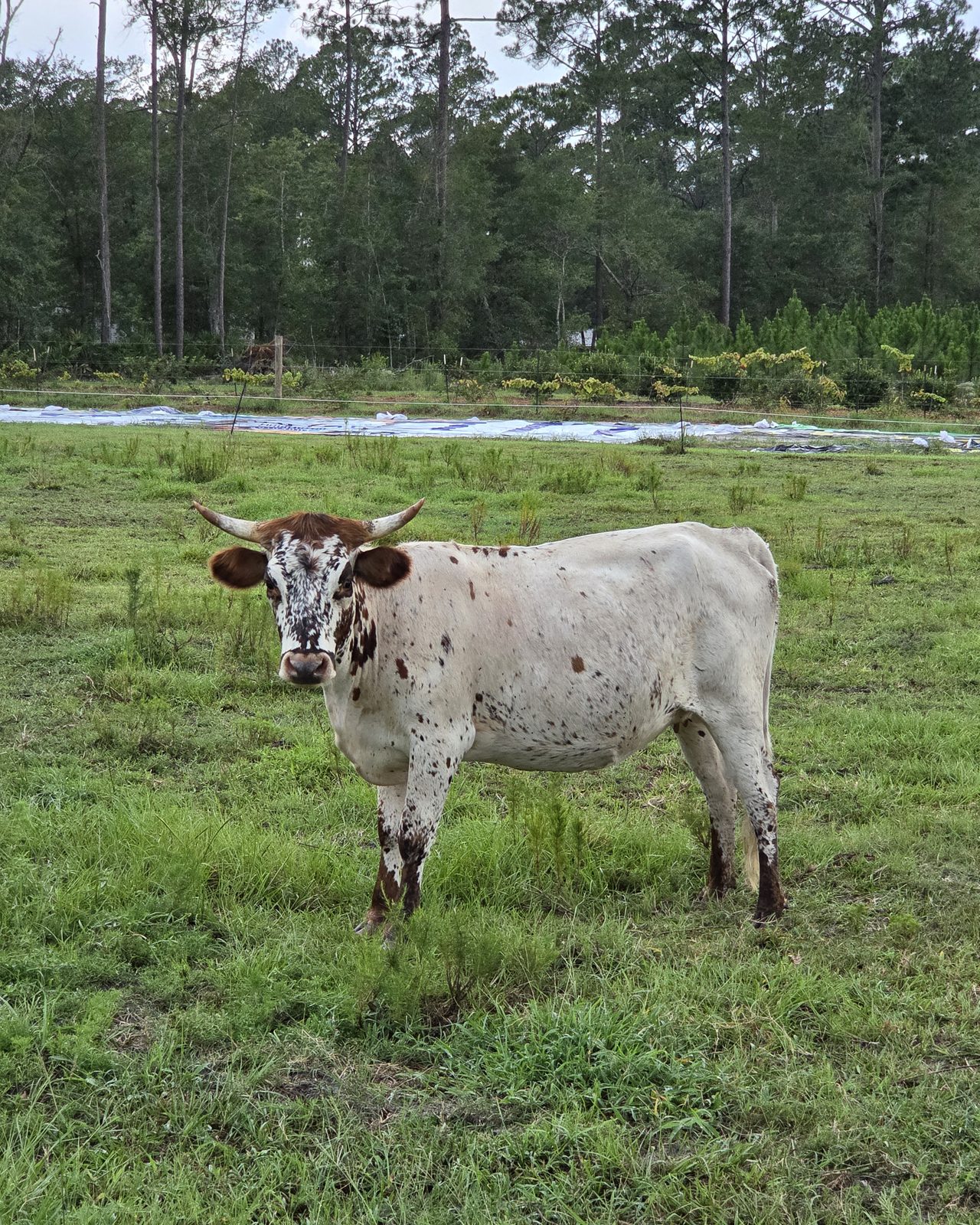
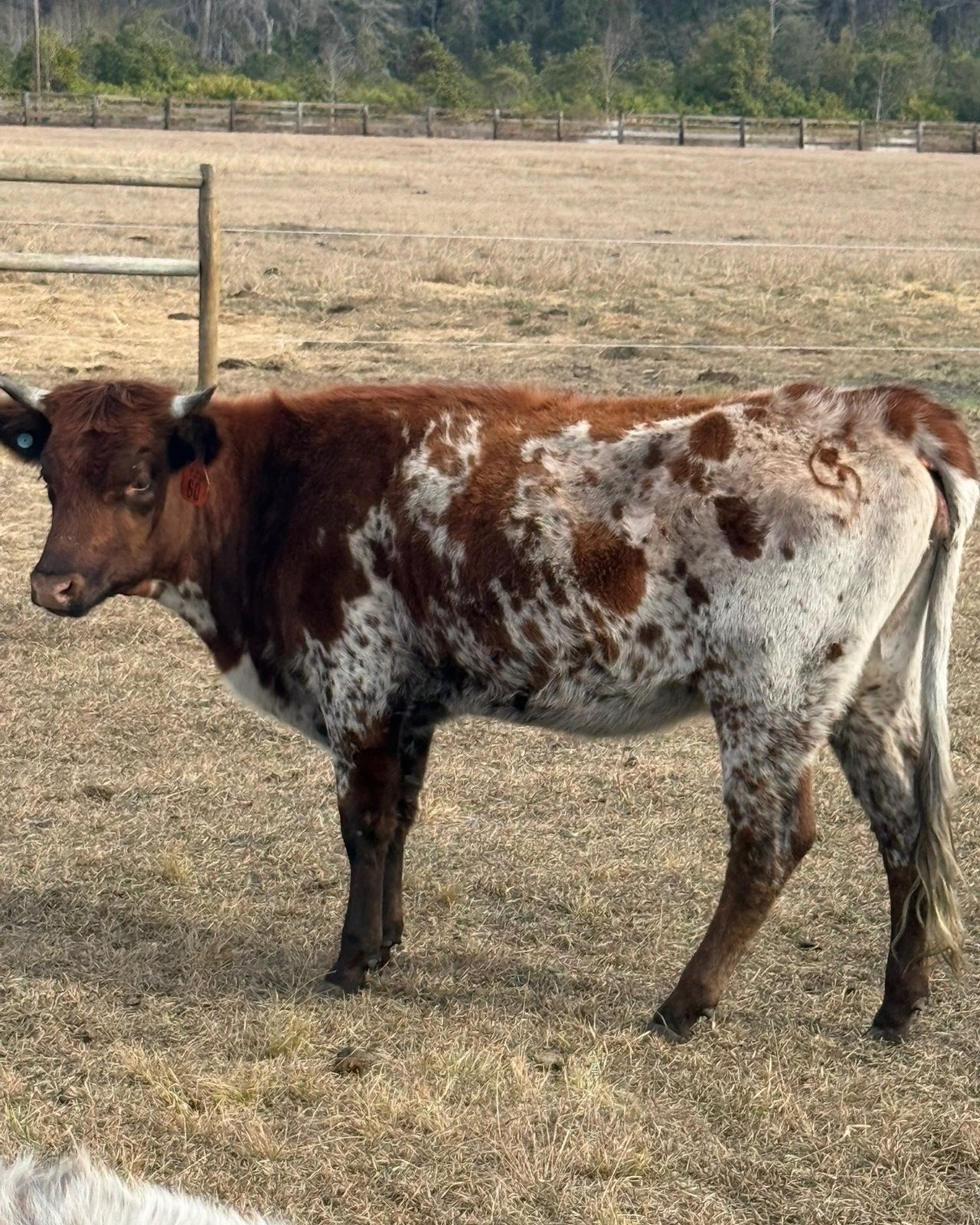
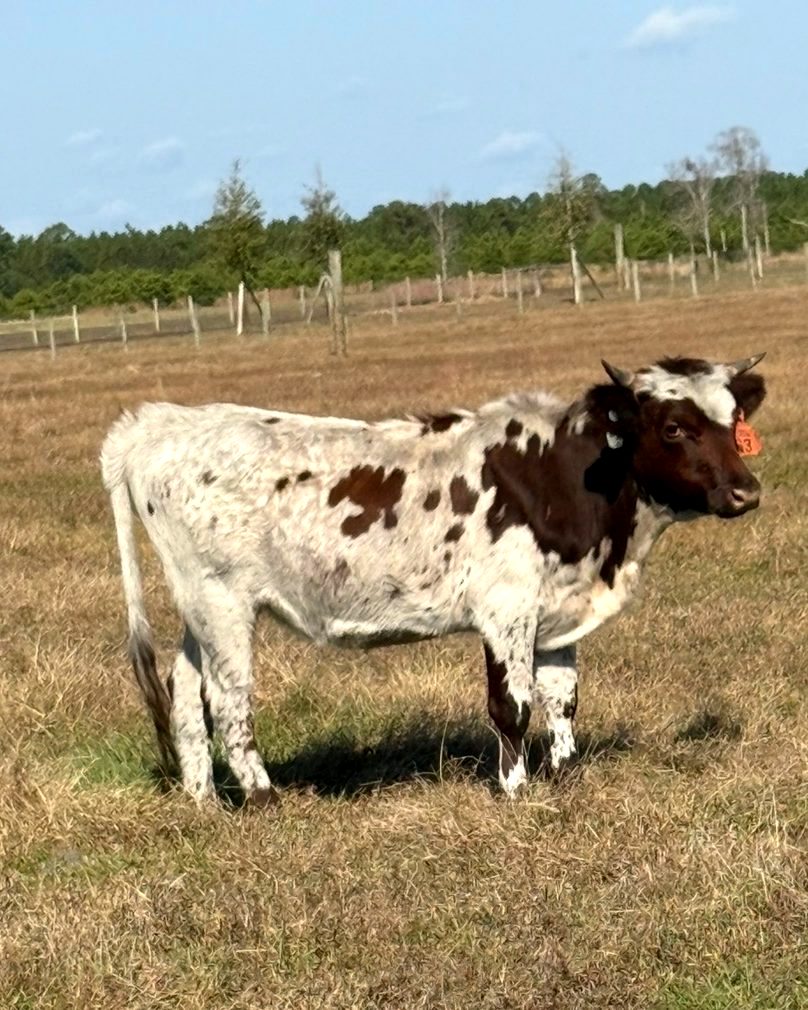
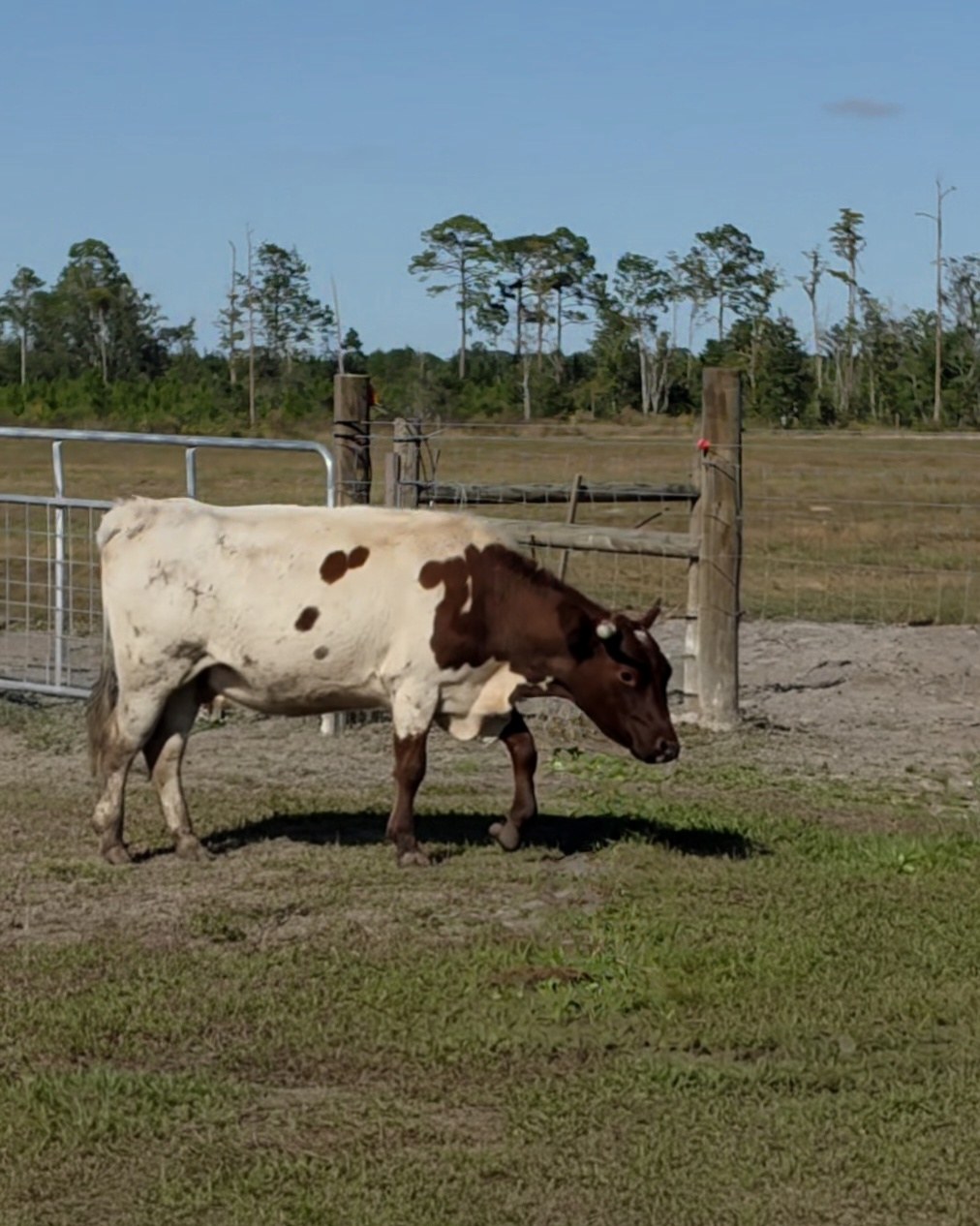
We are new to this breed. The foundation herd is four Conway-strain heifers, two Holt/composite heifers, one Holt/composite cow, and one Holt/composite bull. Conway and Holt are historic family strains of Pineywoods cattle. “Composite” here means animals that carry Holt breeding alongside other Pineywoods influence, as described when we acquired them.
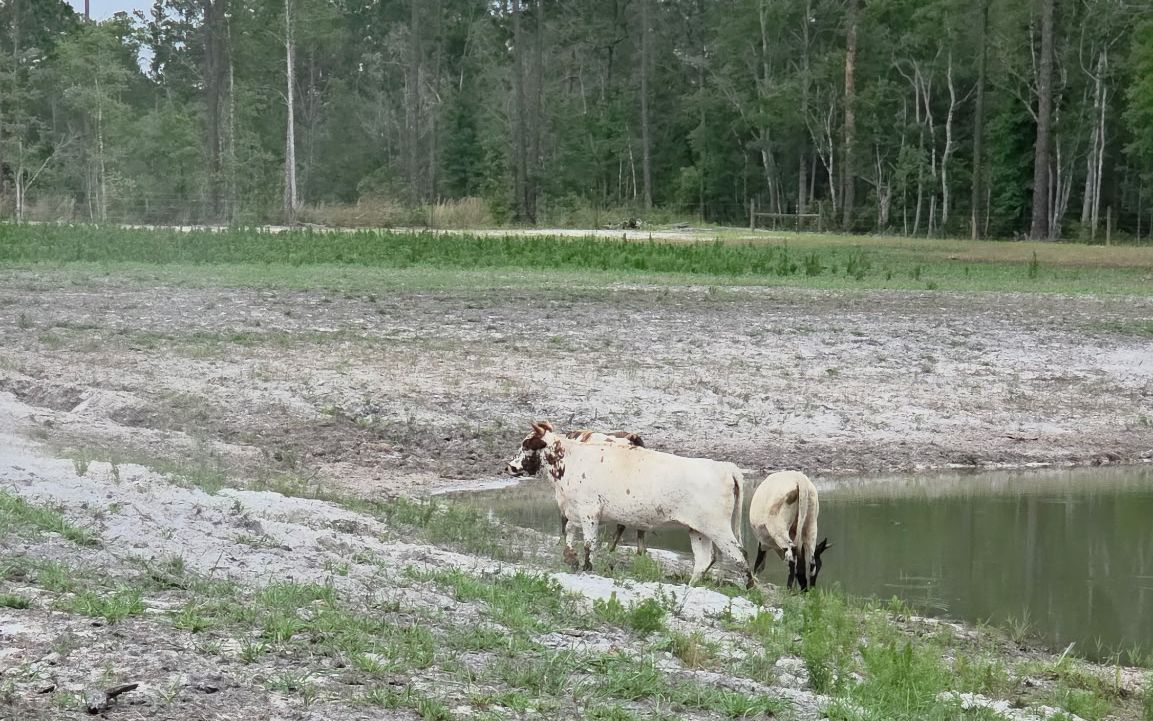
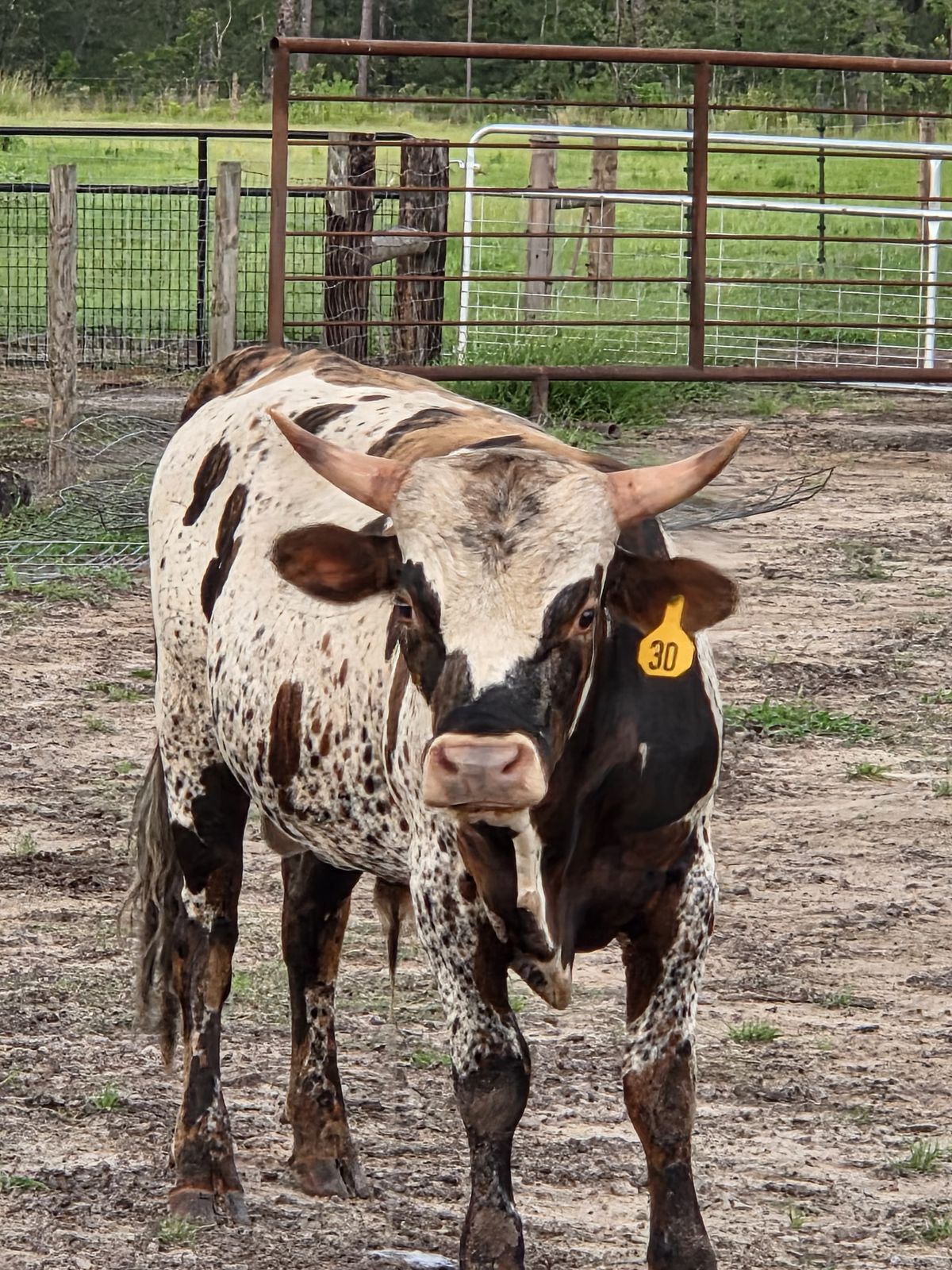
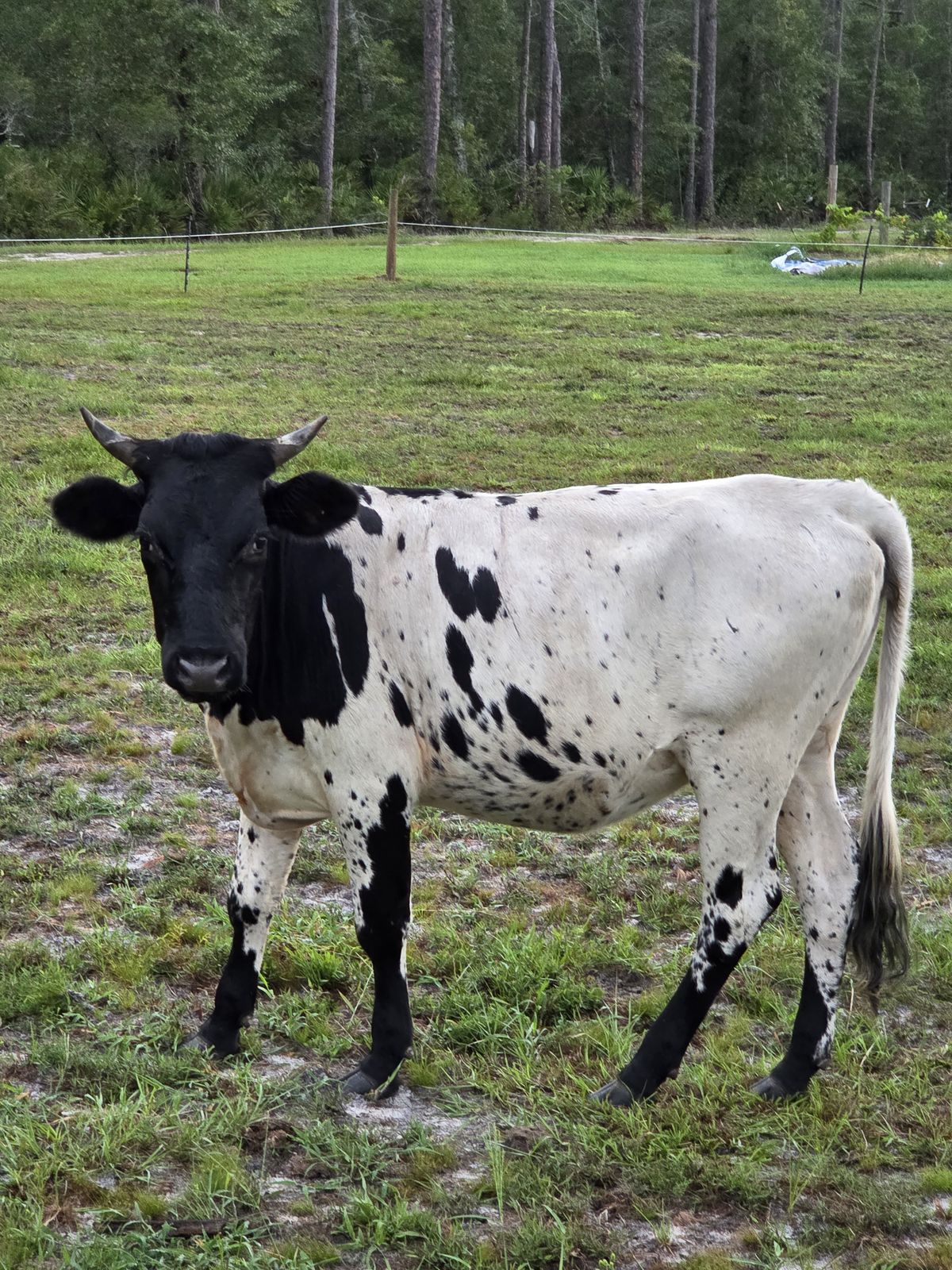
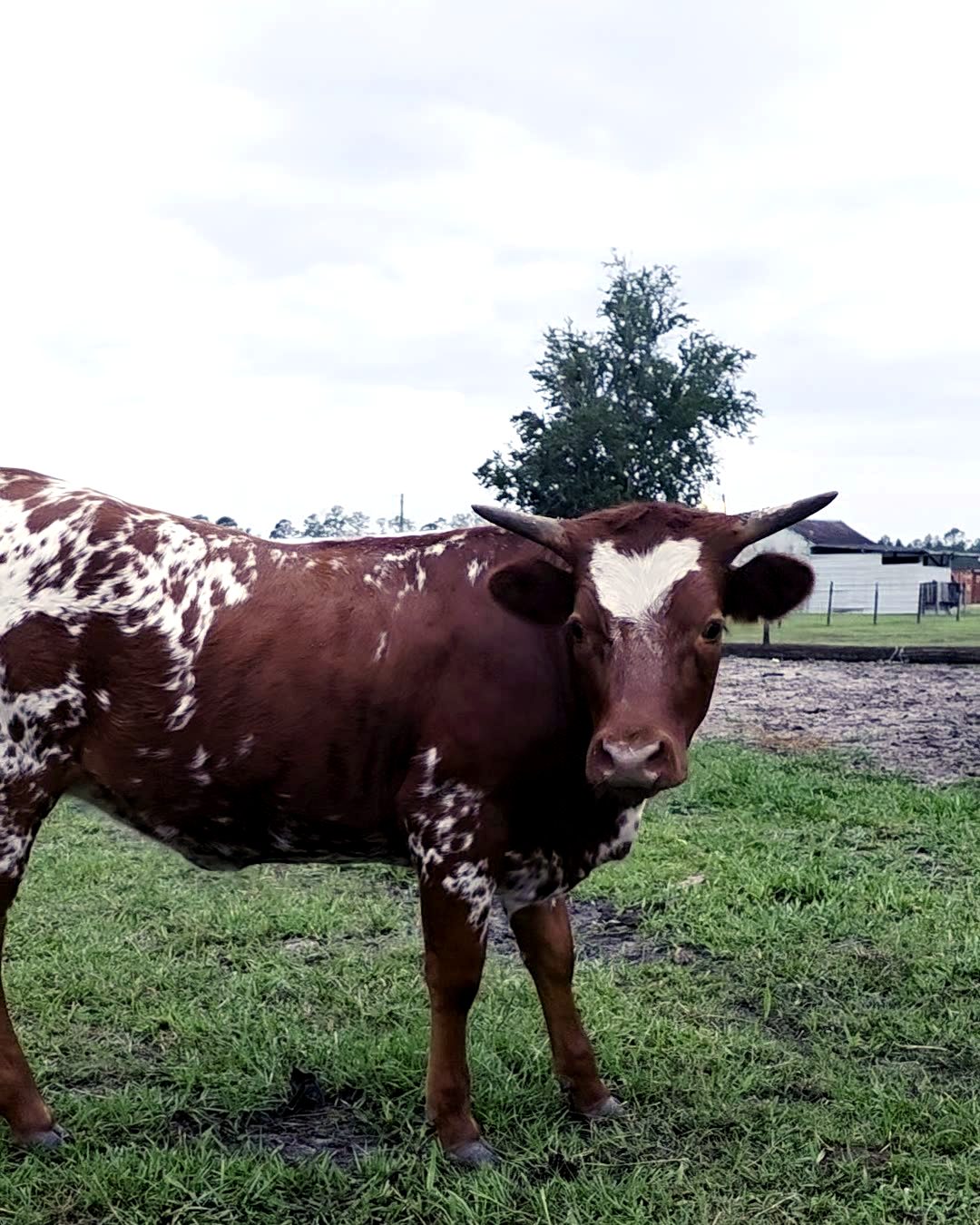
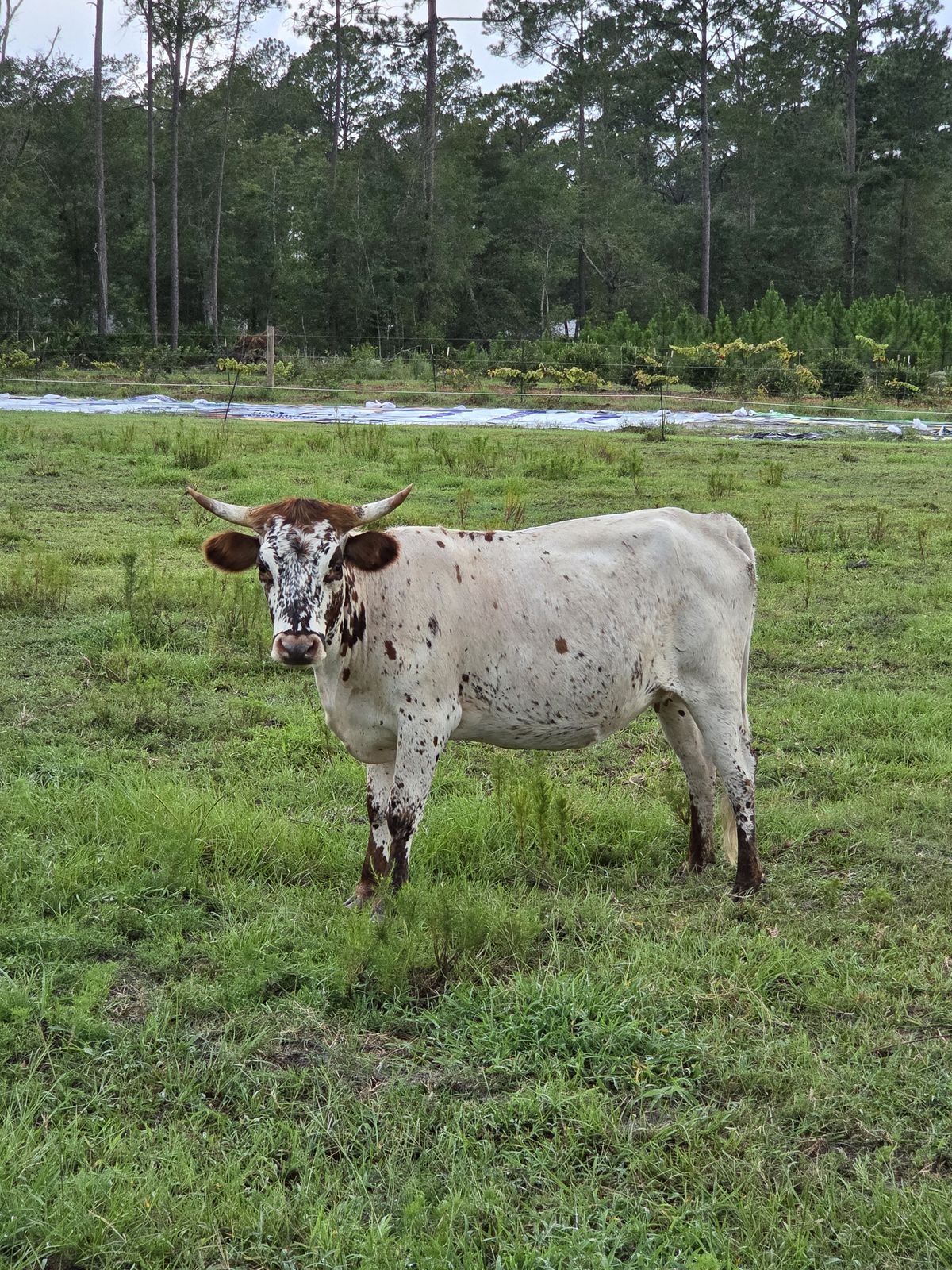
The photographs below show Outlaw, our Holt/composite herd bull, Dolly, our Holt/composite cow, Pepper and Holly, our two Holt/composite heifers, and Ginger, Honey, and Annie, three of our four Conway heifers. A photo of our fourth Conway heifer, Maple, is coming soon.
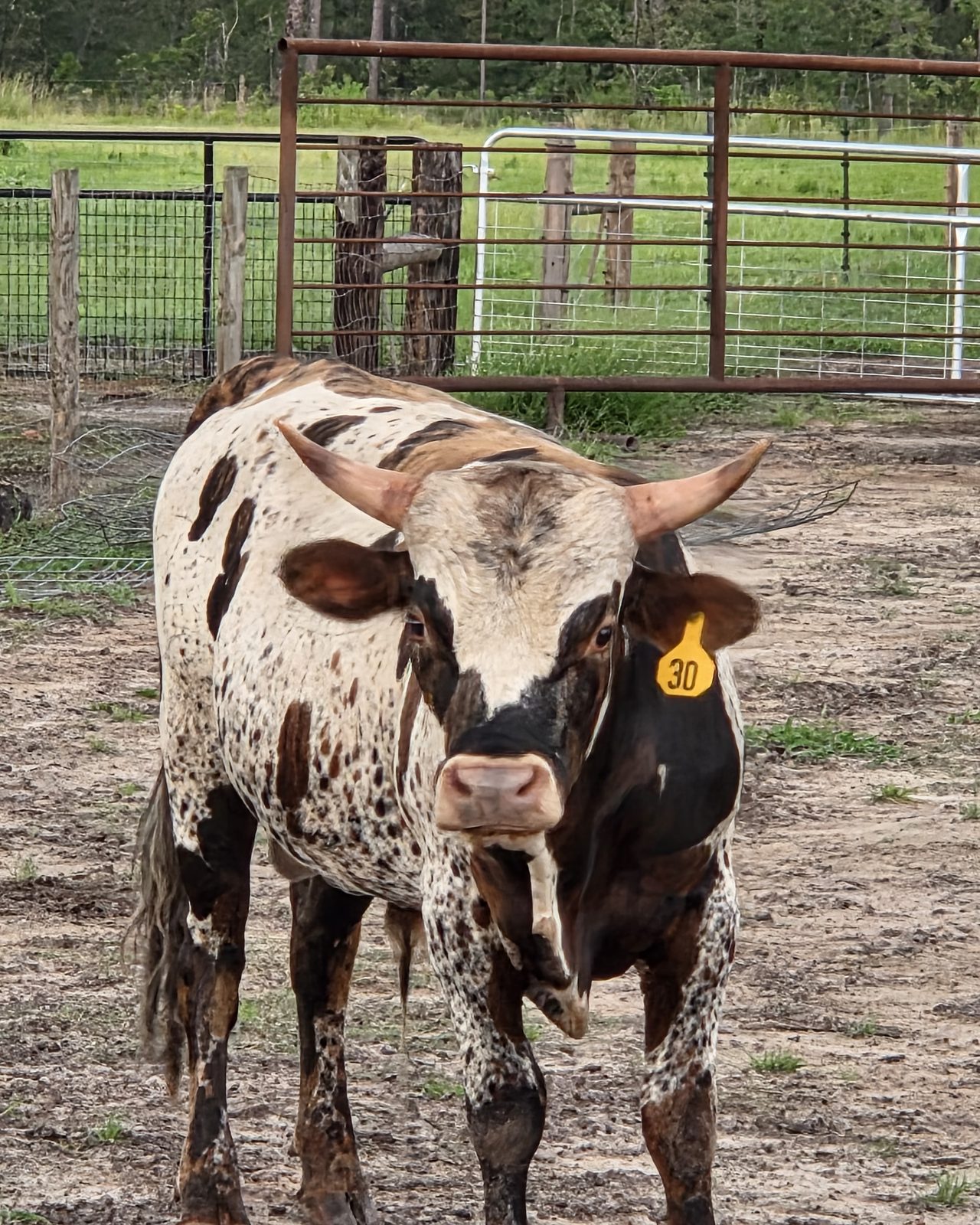
Holt / composite
Herd bull, sire of Wildcard (our October 2026 bull calf)
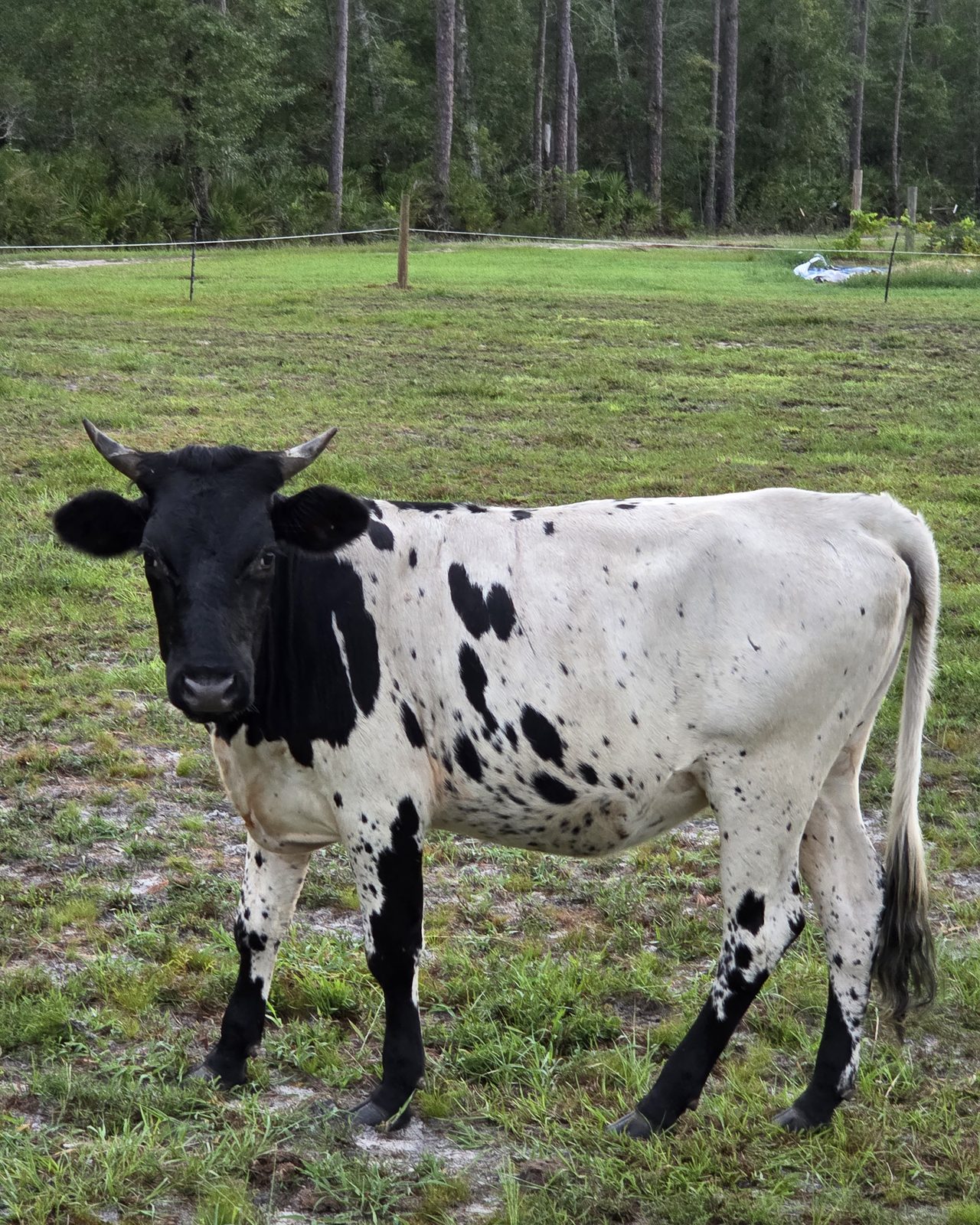
Holt / composite
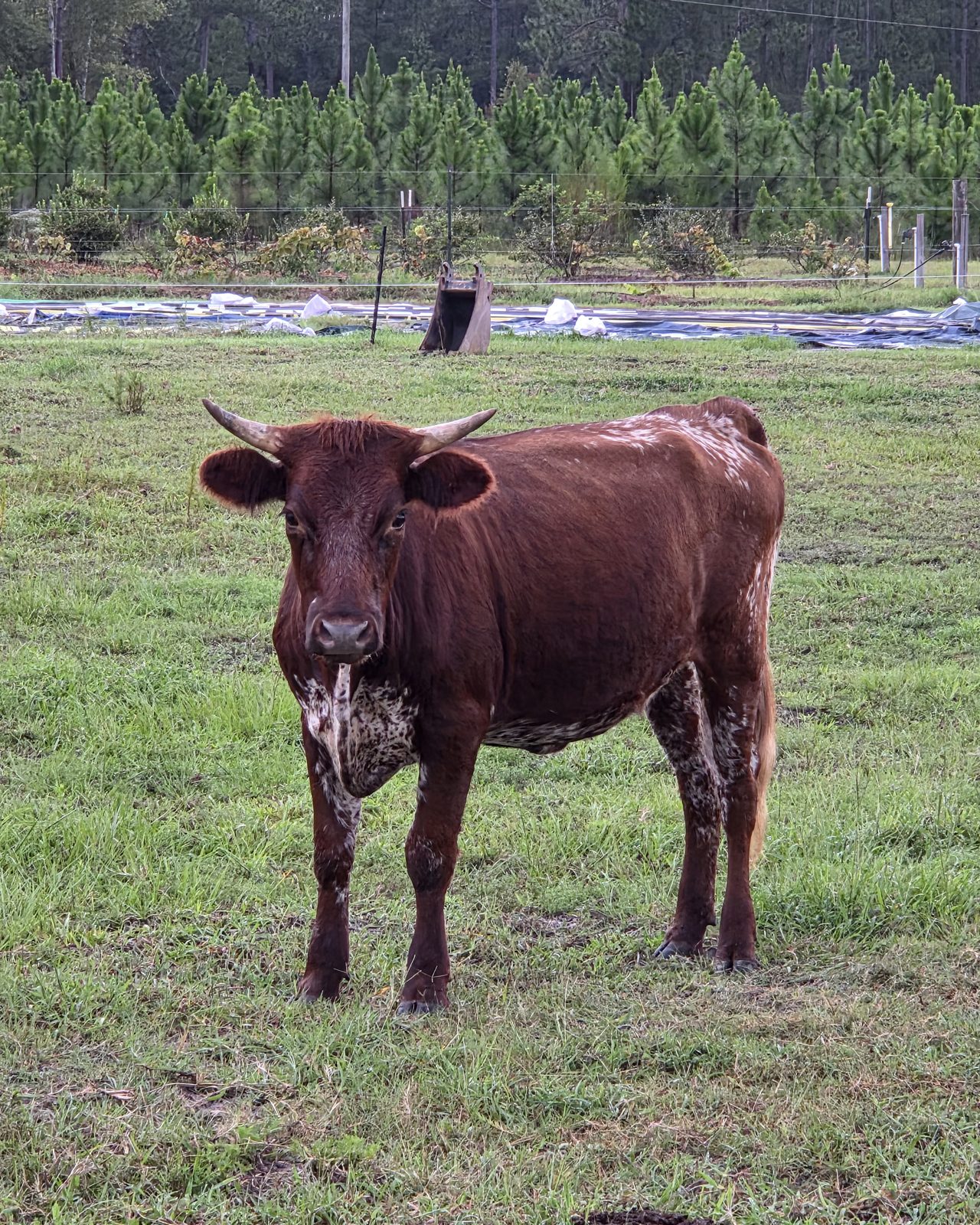
Holt / composite
Holt / composite
Cow, dam of Wildcard (our October 2026 bull calf)
Conway
Conway
Conway
Previously Sold
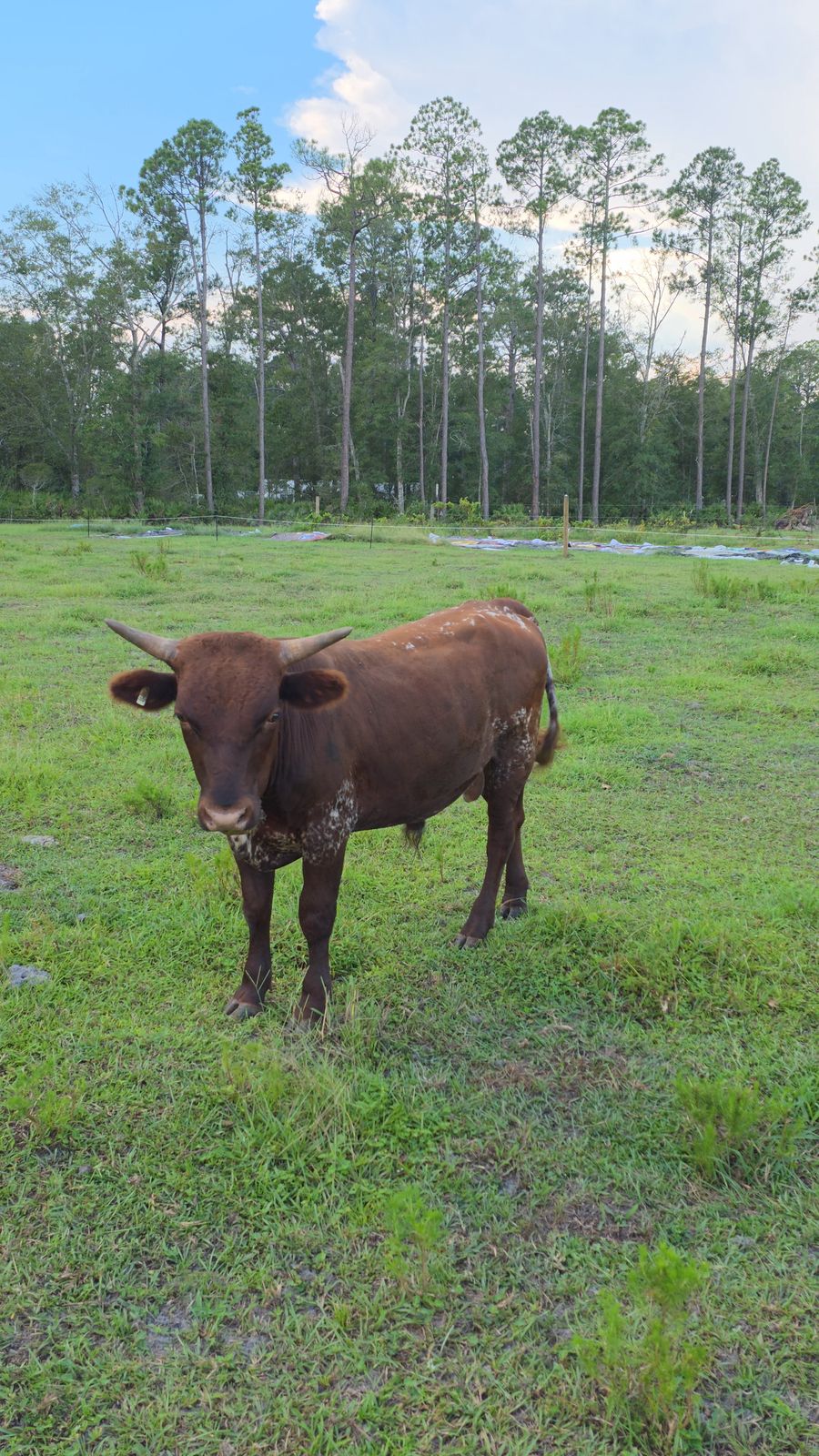 Sold
Conway
Bull
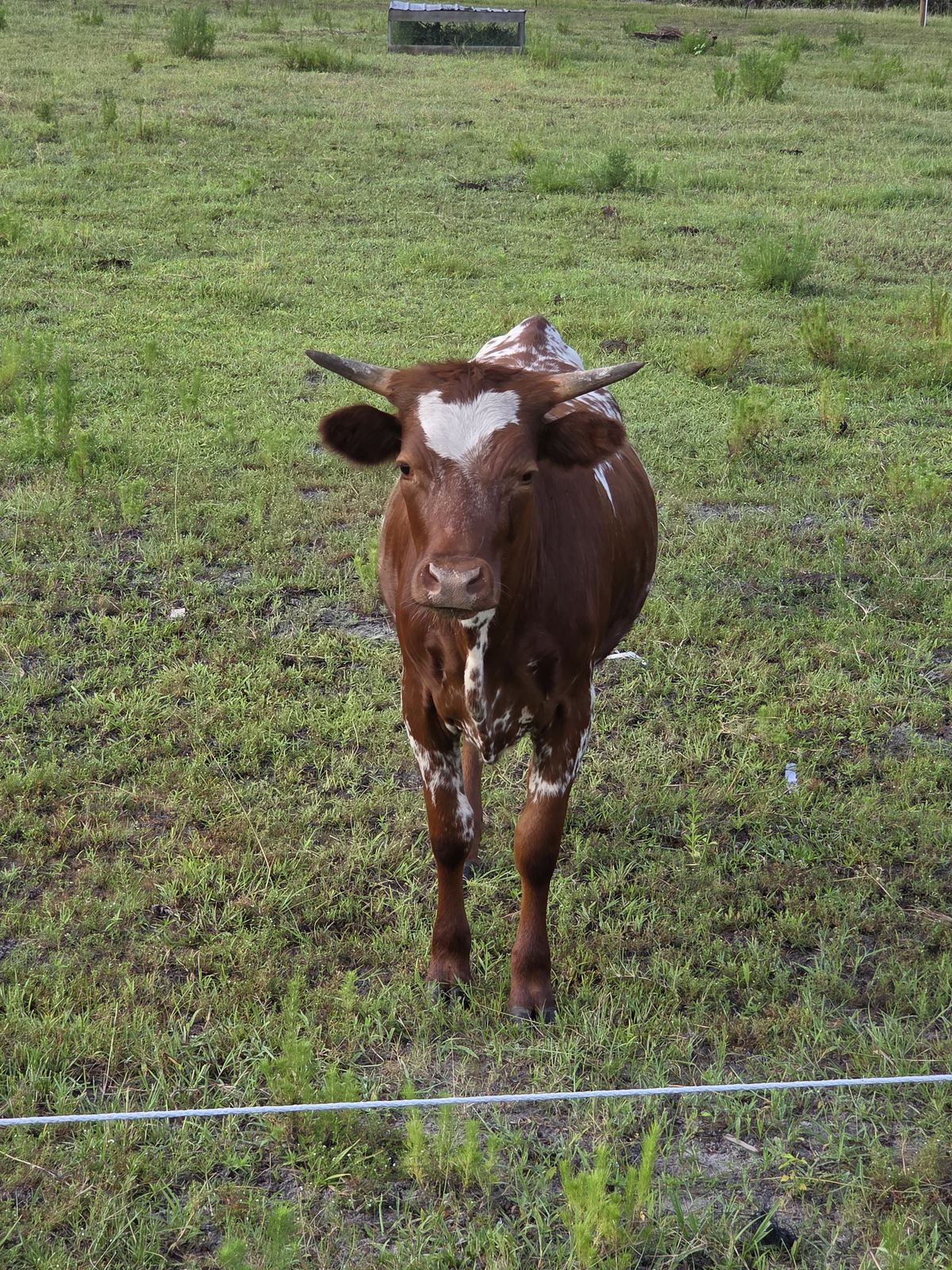 Sold
Conway
Heifer
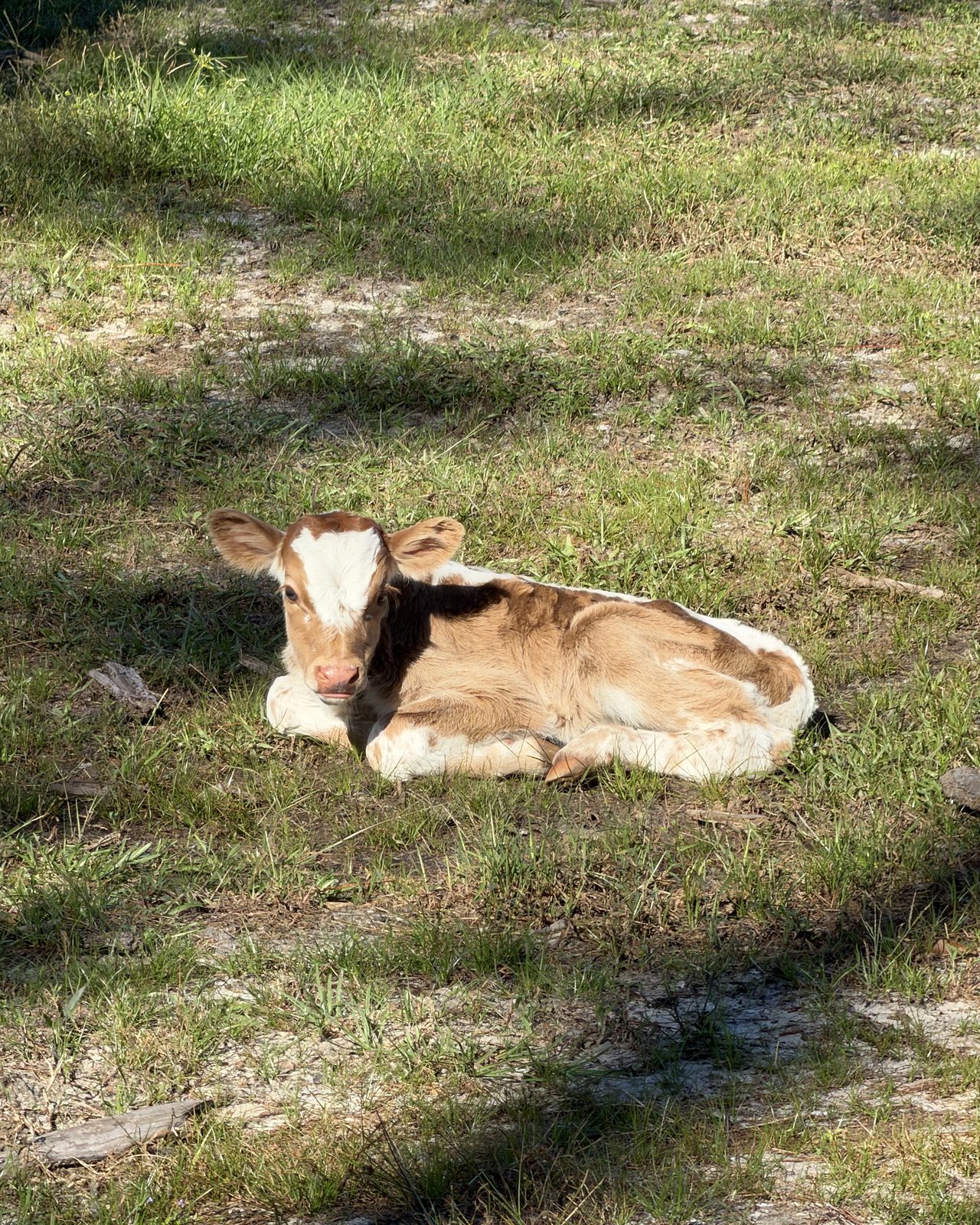
Available
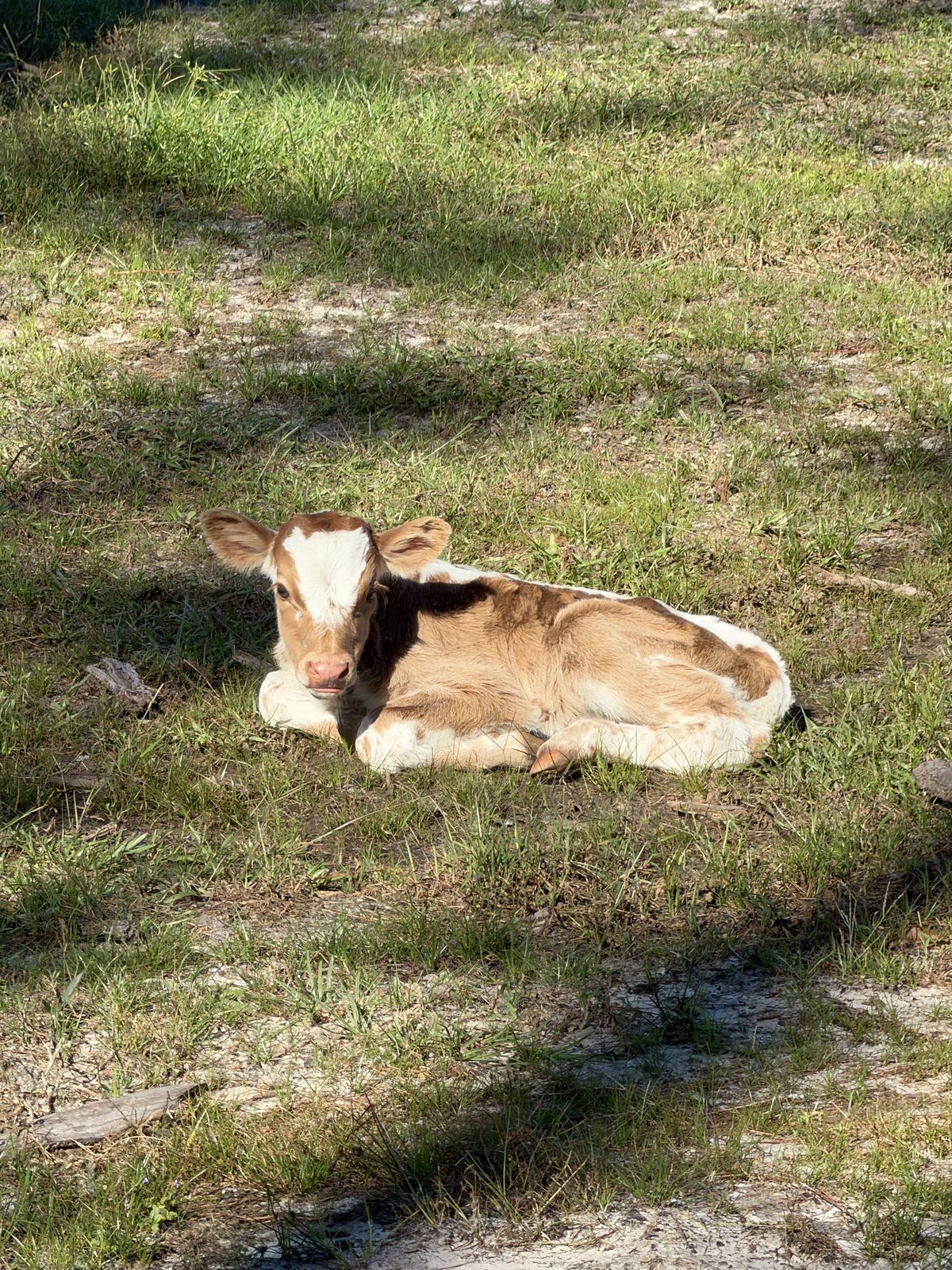
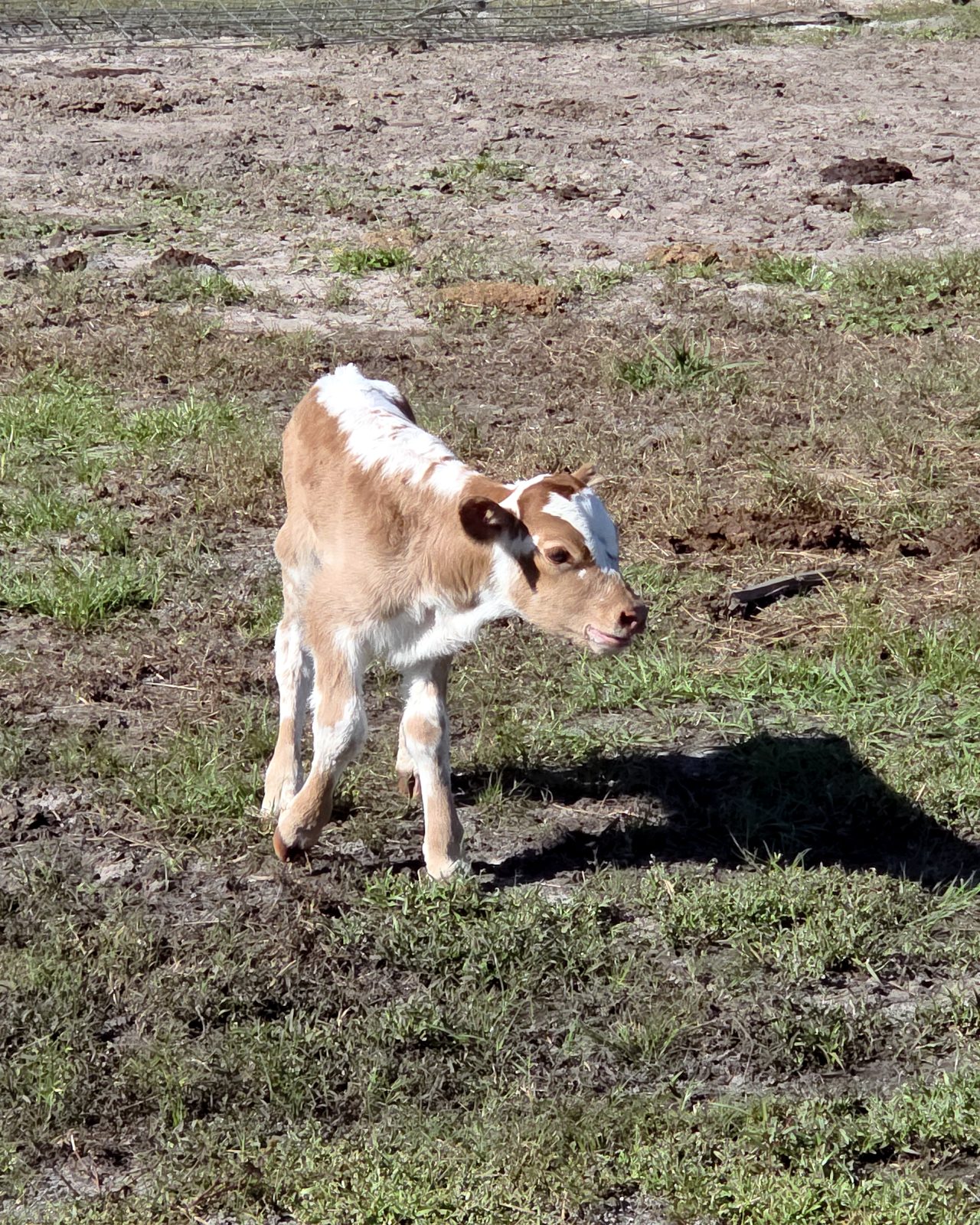
Outskirts Wildcard ("Wildcard") is our bull calf, born October 19, 2026. He will be available around mid-April 2027. He is out of our Holt/composite herd bull Outlaw and our Holt/composite cow Dolly, both pictured in Our Herd (both calico; he is not calico, which is how he got his name).
If you would like to be considered when he is ready, please join the waitlist. There is no commitment—just a way for us to be in touch.
Join the waitlistGallery
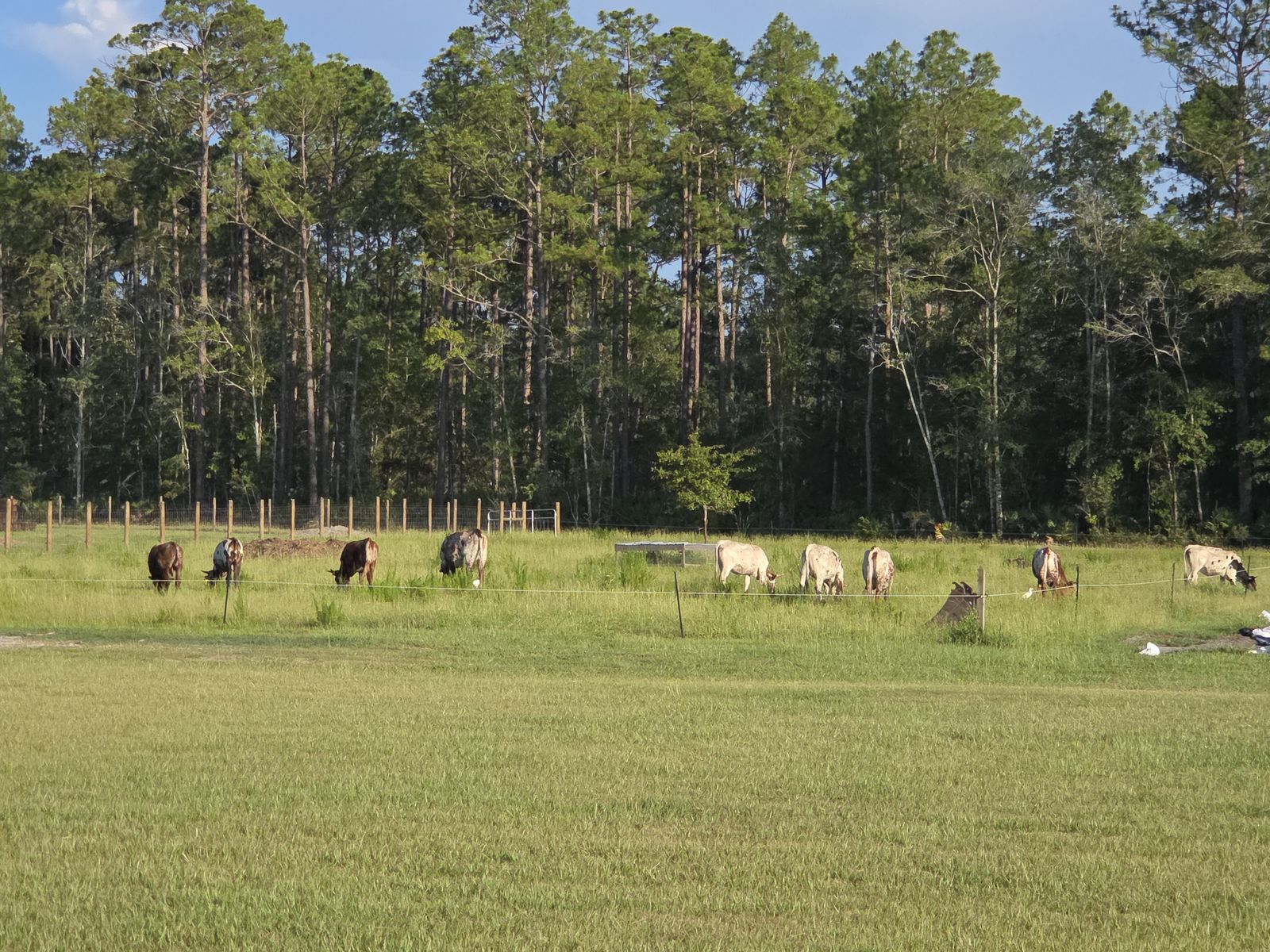
Breeding goals
We are working toward calico-colored offspring—cattle whose coats carry a lively mix of colors rather than a single solid shade. Pineywoods already show an unusually wide range of colors and patterns, from solids and brindles to speckled and color-sided coats. Calico is the look we hope to see more of as this herd has calves.
We want to build the herd up carefully so that we can offer offspring. Our bull calf Wildcard, born October 19, 2026, will be our first, available around mid-April 2027. When later calves are ready, this page and our waitlist will still be the place to start. There is no commitment in joining—just a way for us to let you know.
Contact
We are based in southeast Georgia and glad to hear from people who want to follow the herd, learn about the breed, or be considered for the bull calf this spring or for later offspring.
Joining the waitlist is only a first step, so we can keep in touch as the herd grows. There is no obligation to buy.